Monday, February 28, 2022

Constable Zachary Rolfe's murder trial told Kumanjayi Walker posed 'low threat' when second and third shots were fired


This is absurd and shows no awareness of the use of firearms in policing.  The key point is that rapidly aimed fire from a handgun  is not very likely to hit its target.  Most shots will go wild.  So the only way of being reasonably sure that the target is hit is to fire multiple rounds in close succession, which is exactly what Rolfe did. 

It is easy to do armchair pontification about rights and wrongs after the event but the police are often confronted with a situation requiring split second decisions, which was the situation here.  The root cause of the death was the deceased's hostility to the police, not the action of the police in response to it

It may be relevant that Const. Rolfe appears to be a little guy who would reasonably be particularly fearful of any physical confrontation


Biomechanical expert Andrew McIntosh on Friday gave evidence in the NT Supreme Court, where Constable Rolfe, 30, has pleaded not guilty to murder and two alternative charges over the fatal shooting in the remote community in November 2019.

Dr McIntosh was asked about the moments after Mr Walker began to struggle with Constable Rolfe and fellow officer Constable Adam Eberl, when the 19-year-old stabbed Constable Rolfe in the shoulder with a pair of medical scissors.

The first shot then fired by Constable Rolfe is not the subject of any charges, but prosecutors argue the second and third shots fired 2.6 and 0.5 seconds later were not legally justified because the threat posed by Mr Walker had been contained.

Dr McIntosh said the body-worn camera footage of the incident showed that after the first shot, Mr Walker and Constable Eberl fell onto a mattress on the floor.

As Mr Rolfe moved towards them with his gun drawn, Dr McIntosh said Constable Eberl could be seen putting his body weight on top of Mr Walker, who was lying on his right side.

Dr McIntosh said this meant Mr Walker's right arm, which was holding the scissors, would likely have been restricted in its movement range.

Under questioning from the prosecution, he agreed that when the second and third shots were fired, Mr Walker was not likely to be a "direct threat" to Constable Rolfe.

He agreed Mr Walker was likely to be a "low threat" to Constable Eberl, because his ability to deploy the scissors was impaired, as his arm was stuck beneath him.

"If you're using a weapon in your hand and your arm is pinned in that way, then it's very difficult to develop force with the weapon that you have because you can't accelerate your arm, reach any velocity, reach any momentum and exert a force onto someone else," Dr McIntosh said.

He said the degree of restriction depended on how much of Mr Walker's right arm was under his own body and that even if only the upper arm was pinned down, his movement would have been "greatly constrained".

Under cross-examination from the defence, Dr McIntosh agreed the body-worn camera footage never showed the extent of control Constable Eberl had on Mr Walker's right forearm, while he was lying on top of him.

Dr McIntosh also agreed that he had the "luxury of slowing down" the vision to make his analysis, which the officers were not able to do during the incident.

"Do you accept that the perception, or perspective, of both officers Eberl and Rolfe, may be quite different from your analysis?" defence barrister David Edwardson QC asked.

"Yes," Dr McIntosh replied.

Forensic pathologist Paull Botterill also took the stand on Friday and told the court the "overwhelming majority of stab and incised wounds" in the general community do not result in death.

But he said Mr Walker's scissors did have the potential to cause a life-threatening injury if they had struck a vulnerable part of the body at a sufficient force.

He added that if Mr Walker's arm movement was restricted, the likelihood of a lethal injury was slim.

"If the limb was not able to freely move, then the only way that an implement such as those scissors could have resulted in a serious life-threatening injury would be if there was movement of the other party, the police officer, up against that immobilised weapon," Dr Botterill said.

"And it's very unlikely to result in a potentially fatal injury."

At the end of Friday's proceedings Crown prosecutor Philip Strickland SC said he would call two more witnesses on Monday and expected to wrap up the prosecution's case on Tuesday morning.

https://www.abc.net.au/news/2022-02-25/nt-police-zachary-rolfe-murder-trial-yuendumu-kumanjayi-low-risk/100862354

Friday, February 11, 2022

Muslim men awarded $61,755 in costs after court played police bodycam vision


Five men who were wrongly accused of assaulting police have been awarded $61,755 in legal costs after a magistrate noted there were “glaring and serious discrepancies” between the police version of events and video footage of the incident.

Khaled Zreika, 21, and Hussein Zraika, 22, had just bought disposable face masks at a petrol station at Guildford in Sydney’s west on September 24 last year when police entered the store and arrested them for failing to wear masks.

The situation rapidly deteriorated when the men followed police outside and questioned why they were being arrested, with the officers from Raptor Squad wrestling the pair to the ground and calling for assistance.

Noah Obeid, 19, Fadi Zraika, 20, and Zachariya Al-Ahmad, 20, who approached police to criticise them for the arrest, were also arrested as scores of officers responded.

The five were charged with various offences including assaulting police, harassing police, hindering police and resisting arrest, however all charges were later withdrawn apart from a breach of the public health order.

On Thursday, Magistrate Greg Grogin said it was “abundantly clear” there was a “major” discrepancy between vision of the incident and the officers’ claims.

He found the proceedings against the men were initiated without reasonable cause, and ordered police pay $61,755.80 of legal costs.

Police had earlier conceded there was no reasonable cause to bring the charges and agreed to pay costs, but argued the amount sought by the men was manifestly excessive.

In bodycam footage played to Parramatta Local Court on Thursday, Constable James Katsetis and Constable Dylan Leyshon from Raptor Squad can be seen walking into the service station, with one of the officers greeting the men by saying “hey brother, how you going”.

“No mask, both you boys,” Constable Katsetis continues. “You’re both under arrest ... can you hop outside for us?”

The officer, who initially admonishes Hussein Zraika for swearing in a public place, is depicted a short time later wrestling with him on the ground before telling him, “you f---ing move, I’ll knock you out c--t”.

Constable Katsetis then moves to where Khaled Zreika is being restrained nearby and knees him multiple times, causing him to shout in pain, before telling him: “don’t f---ing move c--t”.

Mr Grogin said lawyers representing the men had criticised the actions of police, but the award of costs could not be viewed as being a punishment.

“The fact that costs are not punitive does not require this court to come to a decision as to the actions of the police on the day,” he said. “Suffice to say, a picture paints a thousand words.”

Mr Grogin said he had viewed the facts sheets prepared by police, as well as CCTV footage and bodycam vision, and “there are obvious, glaring and serious discrepancies, to my eyes”.

“It would be obvious to anybody involved with the criminal law and the criminal courts the reason why these charges were withdrawn,” he said. “To say that the video showed nothing but a very serious physical altercation between police and the defendants would be an understatement.”

Police prosecutor Lachlan Kirby told the court he has not been informed why charges against the five men were withdrawn, but there is a “clear inference, having watched that footage, that this matter was not going to end in favour of the prosecution”.

“I’m drawing the same inference as everyone else as to the reason the matters were withdrawn” Senior Sergeant Kirby said. “I’m not an idiot.”

Mr Grogin said the lawyer for the men, Abdul Saddik, began to carry out his own investigation including sourcing CCTV from the petrol station due to fears the footage would not be disclosed by police.

“It would appear his concerns were well-founded,” Mr Grogin said.

The court heard police did not serve a brief of evidence containing CCTV or statements, in defiance of a court deadline, before the charges were withdrawn. Some documents were given to the men for the first time on Thursday.

Mr Grogin said the costs proceeding was “not a forum for criticism” or the “airing of grievances” and “I am not determining the actions of anybody, particularly any police officers involved”.

It is understood that lawyers for the men will ask for police to investigate the officers’ actions and consider criminal charges. If this is not done, the lawyers will consider a private prosecution.

https://www.smh.com.au/national/nsw/men-paid-61-755-in-costs-after-court-played-police-bodycam-vision-20220210-p59vga.html

Wednesday, February 9, 2022

Bungles by NSW police officers cost $30m a year


Assault, battery, trespass and unlawful imprisonment and other cases against NSW police are costing $30 million a year.

NSW police bungles are costing more than $30 million a year in damages and compensation payouts to members of the public claiming to have been mistreated.

The number of successful claims involving police in New South Wales reached almost 400 in the past financial year – the highest level in five years and included assault, battery, unlawful imprisonment, malicious prosecution and trespass

More than $148 million has been paid since 2016 – an average of more than $80,000 a day – for more than 1600 incidents, sparking calls to overhaul police training and the “woke” police leadership.

Answers to Questions on Notice in NSW state parliament have revealed that during the pandemic year 2020-2021, police paid out $32,972,561 for 398 incidents, a jump of 100 incidents from 2019-2020 when $24,164,658 was paid out for 298 claims.

In comparison, Queensland for the same period paid out only $2,281,850 million, although the force has about 12,000 officers and NSW has about 17,000.

Retired detective sergeant turned One Nation MP Rod Roberts, said the consistency of the payouts every year showed the problems in NSW Police were “systemic” and had been ongoing for years.

“Police are a law enforcement body. Not social workers. To enforce the law they need to know the law, which by these figures they do not,” said Mr Roberts.

“We need to support our frontline officers and the first step in this is ensuring that they receive the appropriate training to enable them to perform their roles professionally,” he said.

NSW Police Acting Deputy Commissioner Corporate Services, Paul Pisanos said, “There is a myriad of reasons why civil claims are brought against the NSW Police Force, and to suggest that training – or lack thereof – is the cause is incorrect.”

The claim costs, including legal expenses for defending the police, are paid for by the NSW Police Force insurer.

The compensation amounts were revealed after questions in the NSW parliament and showed the categories of claims spanned intimidation, injurious falsehood, collateral abuse of process, negligence, trespass, misfeasance in public office.

Last year police were told they would not be held to account if they issued tickets wrongly for Covid breaches.

Mr Roberts said the management and leadership of the police in the past had been “too woke”.

“This is evidence they are not being trained properly and are being taught too much woke political correctness,” he said.

“The police are not getting the bread-and-butter education they need and the taxpayer is paying for it.

“The way we can be protected is for police to be aware of their powers.”

The call for better police training comes after criticism of plans by NSW Police to train 315 officers to become special gay and lesbian liaison officers for a huge World Pride event next year.

One Nation MP Mark Latham said the number was disproportionate and police should instead consider special training for dealing with housing estate and elderly residents.

https://www.couriermail.com.au/news/national/bungles-by-nsw-police-officers-cost-state-30m-a-year/news-story/0e6cbe0140b0933a6e51374ba5be9ffc

Tuesday, February 8, 2022

Australia's Gestapo State: Police stop Catholic mass to check masks

Churchgoers have been left stunned after a police officer stopped a Catholic mass on Thursday to check parishioners were wearing masks.

Police halted the service at St Bernadette’s Glendalough church midway through the priest addressing the congregation following a tip off that people were not wearing masks.

Masks are currently required to be worn at all public indoor setting across Perth and the Peel, South West, Wheatbelt and Great Southern regions.

Five people were found to not be wearing masks, one of which had an exemption while the four others were made to put them on.

The incident was shared to Facebook by a parishioner, who wrote “a policeman allowed himself in, strutting up the aisle demanding correct mask behaviour and checking exemptions.”

“Where have we seen this behaviour before in history?

Police said in a statement they responded to a report from a member of the public of people not wearing masks inside a church in Mount Hawthorn.

“Upon attendance, 5 people were spoken to by police and complied in wearing a mask,” they said. “One person provided proof of an exemption.”

Catholic Archdiocese of Perth archbishop Tim Costelloe said it is “highly regrettable” that police felt obliged to intervene during the service to enforce the mask rules.

“It is my hope that other ways can be found to deal with this delicate issue in future and my office stands ready to cooperate with the police in this matter,” he said.

“It is the formal and very public policy of the Archdiocese of Perth to do everything it can to facilitate compliance with all the government’s requirements in relation to the COVID-19 pandemic.

“It is a matter of regret to me that the police were placed in a position which led them to take the action they did.”

The church has since shared a message to its Facebook page reminding all parishioners that they cannot enter the place of worship without a mask.

The interruption left churchgoers stunned, with one audience member saying it was “confronting” to see an officer in the church.

“Everyone was pretty stunned, it was confronting,” parishioner Matthew told 6PR Radio. “It’s troubling to see the liturgy you love stopped by police.”

https://7news.com.au/news/wa/community-furore-after-police-stop-st-bernadettes-glendalough-church-service-to-check-masks-c-5567846

Sunday, February 6, 2022

Qld. Police have been warned they could face disciplinary or legal action for posting criticisms of the government or politicians on social media


Free speech?

Police have been warned they could face disciplinary or legal action for posting criticisms of the government or politicians on social media, with a new policy being sent out to officers.

The social media policy says Queensland police must not post criticisms of respective parties or policies that raise questions about the officer‘s capacity to work “professionally, effectively or impartially”.

It also bans them for posting or publishing derogatory comments about police service policies, procedures, operations and activities, as well as partner agencies.

The new policy comes after Commissioner Katarina Carroll unleashed on rogue officers making offensive social media comments about fellow officers and members of parliament, launching an investigation into “deeply concerning, nasty and defamatory” material.

In July she told officers she was investigating inappropriate content on external social media pages linked to current and former Queensland Police Service members.

One of the Facebook groups was understood to be Defend the Blue – a private group for police officers who used it to express frustrations with the government or the service hierarchy.

“Members may be subject to disciplinary and/or legal action for improper use of social media in a personal and non-work related capacity including, but not limited to, when using their own name, a version of it, a person or persons name/s which is not their own (with or without permission) and/or pseudonym/s,” the new policy says.

“A claim of anonymity may be irrelevant.”

The new policy has also told officers to put on the highest privacy settings possible on social media and warned them that messages sent in a private capacity in Messenger or WhatsApp could still result in dismissal.

It said officers could not create or manage unofficial social media police groups, pages or accounts and that personal or corporate accounts must not be used to “establish or pursue an improper relationship with any current or former victim, offender or witness”.

Bond University professor Terry Goldsworthy, a former police detective, said officers now had to be “apolitical” without engaging in any commentary.

He said the social media policy change was necessary and would “eradicate the keyboard warriors”.

“It’s risk management, they’ve been caught short with that Facebook group and now what they’ve done is put out a comprehensive policy that captures just about anything,” Mr Goldsworthy said.

“It would suggest that now if you are a police officer you wouldn’t want to be putting up any posts that has any kind of commentary or politics or government policy at all.

“I think the service had to do it, it’s all encompassing and it’s very limiting,” he said.

“The job of police is to enforce the mandate of the government which is duly elected by the people, it’s not there to offer commentary of it and if they’ve got issues or critiques they can be dealt with internally.”

https://www.couriermail.com.au/truecrimeaustralia/police-courts-qld/qld-police-warned-over-posting-criticisms-of-the-government-or-politicians-on-social-media/news-story/4bfa74106aa9a8c272b6c78a4734fea5

Sunday, January 9, 2022

NSW Police scrap controversial search targets after quota rise during pandemic


NSW Police have scrapped their controversial strategy of setting targets for carrying out personal searches and move-on powers, but not before increasing quotas during the COVID-19 pandemic.

The use of numerical goals to monitor performance across police regions and commands has been criticised by legal bodies and civil libertarians as enabling the targeting of vulnerable groups, with the state’s former top prosecutor Nicholas Cowdery labelling the strategy as a distortion of law enforcement.

Mr Cowdery, an adjunct professor of law at Sydney University and a previous director of Public Prosecutions in NSW, welcomed the ditching of search and move-on targets – rebadged “community safety indicators” (CSI) by police last year – saying they could have “serious consequences for innocent citizens”.

“Police would be encouraged to put the worst construction on conduct that they observe to give them justification to conduct searches,” he said, adding a miscarriage of appropriate discretion could be severe for young and vulnerable people, particularly Indigenous Australians.

Police had 'no idea' about strip search laws, watchdog finds
According to NSW Police, the targets were removed for the 2021-22 financial year in line with the commissioner’s priorities for “prevention-focused policing”. No further comment was provided.

NSW Police previously faced heightened scrutiny over the legality of its strip-searching practices, including a public inquiry into several incidents of children being subjected to the procedure at music festivals.

A police spokesperson said the use of police powers, including search powers, were required to be done in accordance with the Law Enforcement (Powers and Responsibilities) Act 2002.

Police increased their targets for carrying out personal searches and move-on powers during the pandemic while their use of those tactics fell markedly through the same period.

Officers had quotas to conduct more than 240,000 personal searches, issue nearly 110,000 move-on directions and detect 305,000 crimes in 2020-21, despite a fall in crime rates across most categories between 2019 and 2021.

Law enforcement persisted in pursuing quotas across a number of crimes during the pandemic, which saw historically low rates in some categories, with many other crimes remaining stable.

The police spokesperson said the indicators were an important assessment tool within COMPASS, the digital system that records incidents and targets, as it provided a three-year average of actual incident statistics across priority categories, to compare performance and identify trends.

“Where there are disparities – whether increased or decreased in comparison to a CSI – it is expected a commander would provide rationale and comparison of the pandemic impact when addressing and reporting on crime results. There is no punitive action in relation to CSIs,” the spokesperson said.

Overall search quotas were increased 1.8 per cent in the 2020-21 financial year, compared to 2019-20, but quotas for some parts of the state went up by far more.

Police were given targets to conduct 21 per cent more personal searches in Nepean in 2020-21 compared to 2019-20, while incidents fell by 24 per cent.

Greens MLC David Shoebridge said increasing targets for “invasive” personal searches by up to 21 per cent during a pandemic “shows how wrong these quotas are.”

“There is hope that with a new commissioner there will be a turn away from the very idea of policing to quotas,” Mr Shoebridge said.

The police spokesperson said preventative policing strategies, along with community engagement, played a significant role in the reduction of crime.

Search targets for Wollongong and Liverpool also increased by more than 15 per cent, while targets for Mount Druitt, Eastern Beaches and Campsie went up by more than 10 per cent. The incidents for those commands fell by between 6 and 20 per cent.

In Liverpool, targets for move-on directions - designed to order people out of public spaces - increased by 35 per cent despite their use decreasing by 22 per cent over the two financial years.

In Leichhardt, move-on targets increased by 21 per cent despite their use dropping by 31 per cent, and in Riverstone, in Sydney’s north-west, the target increased 20 per cent while the incidents dropped by double that.

While the overall target for detecting crimes fell by about 1.8 per cent between 2019-20 and 2020-21 and targets for most individual crime categories fell or stayed the same, the target for drug detection (supply) increased by 11 per cent, from a total of 6364 detections across the state in 2019-20 to 9959 in 2020-21.

The overall incidents of drug detection fell by 1.5 per cent during that period.

The police spokesperson said despite the impact of COVID-19 restrictions on drug markets in the latter half of 2019–20, a number of records were set, including 38.5 tonnes of illicit drugs seized nationally.

“We make no apology for targeting those who participate in, or direct the activities of, criminal groups that impact on the safety of people in NSW,” the spokesperson said.

Asked about the effects of the pandemic on crime trends during a parliamentary hearing in September, retiring NSW Police commissioner Mick Fuller said, overall, “crime is extremely low or extremely stable”.

“Property crime is certainly some of the lowest that we have seen in modern history. It sort-of has been fascinating to watch different factors, such as federal government injections of money into the economy and the movement of people,” Mr Fuller said during budget estimates.

Aboriginal Legal Service NSW and ACT acting Chief Executive Nadine Miles said setting targets “only incentivises police to take a heavy-handed approach and intervene in situations where their involvement may not be necessary”.

The internal data, obtained from NSW Police via freedom-of-information laws, also shows Newcastle City, Port Stephens-Hunter, Mid North Coast, New England, Chifley, and Central West districts all recorded an increase of more than 100 non-domestic violence-related assaults in 2021 compared to 2020, but all their targets for combating this crime were lowered.

https://www.smh.com.au/national/nsw/nsw-police-scrap-controversial-search-targets-after-quota-rise-during-pandemic-20220103-p59lhj.html

Friday, January 7, 2022

Corruption in the Australian Federal Police


Two senior Australian Federal Police officers accused of being part of a “mafia-style group” have been sacked for “abuse of office” and two more have resigned amid the biggest corruption scandal to hit the national police force in decades.

The sackings and resignations follow a high-level investigation into the activities of the group dubbed the “Sydney Mafia”, accused of fraud by using AFP credit cards to buy white goods, televisions and Xboxes, as well as misappropriating office equipment and furniture.

The group was also in the frame for travel rorts, falsifying AFP records and time sheets, misappropriating AFP property and taking vehicles supposed to be used for protecting Defence Force properties for private use.

The investigation made the shocking findings that the officers had been acting in “collusion to engage in corruption and the coercion of others”.

More than 20 serious corruption and misconduct complaints investigated by the anti-corruption watchdog, the Australian Commission for Law Enforcement Integrity (ACLEI), have been established against the four AFP officers.

The revelations come as it can be revealed 22 AFP officers have been sacked in the past two years and 39 AFP members suspended. The AFP has not revealed if any of those have been charged with any offence.

It is the biggest and most serious fraud and corruption investigation into the AFP since the secretive Harrison inquiry findings in the 1990s – which the AFP kept under wraps and never released publicly but led to the sacking of seven AFP officers.

AFP sources who spoke out about the scandal last year said they had been warned not to talk about the investigation “in case it sparks a royal commission” into the wider activities of AFP Protective Service Officers.

But it can now be revealed the corruption investigation established four AFP officers engaged in nine corruption offences and 12 serious misconduct issues, including failing to report corruption.

“The corrupt conduct ranged from private spending on AFP corporate credit card unauthorised acquittal of transactions, using commonwealth monies to fund non-business related travel, collusion to engage in corruption and the coercion of others,” the AFP has reported.

An ACLEI spokesman said “once an investigation is completed, the Integrity Commissioner provides a report to the Attorney-General and the head of the agency involved (AFP) … and may decide to publish that report … on the ACLEI website.”

It has not yet been published.

All four officers involved were Protective Service Officers, who are specially trained in anti-terrorist response tactics, close protection work and are responsible for guarding the Prime Minister, foreign diplomats and Defence Force properties.

When News Corp broke the story last year, law enforcement sources said members of the “Sydney mafia” clique were practised at standover tactics relying on fear, intimidation and retribution to coerce others to keep quiet about their illegal activities, using “dirt files” on staff and unfavourable rostering to “destroy their lives” if they spoke out.

They said the officers had run rampant for years “deliberately abused positions of power for personal gain at the expense of government departments” and the fact they were allowed to operate for so long despite having “atrocious reputations” and widely known fraudulent activities “highlights an absolute failure of the AFP’s internal governance, human relations, professional standards and core values”.

The investigation began after a tip-off led to AFP professional standards officers visiting the Defence Force’s Garden Island base in Sydney to check the number of AFP vehicles in use by protective service officers. One was found missing – sparking raids on the homes of officers.

https://www.couriermail.com.au/news/national/two-sacked-others-quit-as-shock-corruption-scandal-rocks-australian-federal-police/news-story/b32b5d0a522e06f8b90cd3d657f3e7fa

Friday, December 3, 2021

Police search for missing campers over after remains found


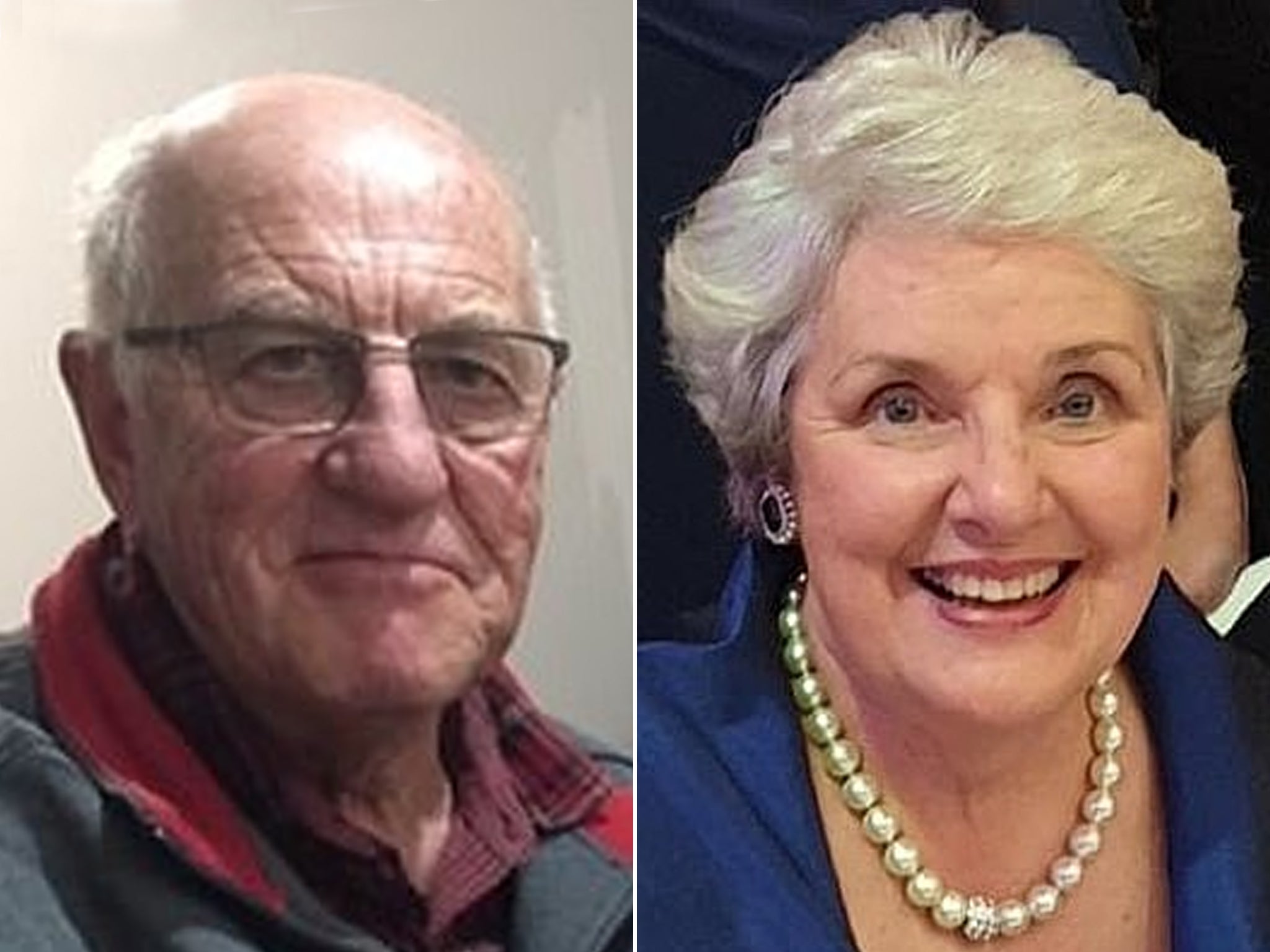
This episode really grieves  me.  For two elderly people to have found love for one another is wonderful.  And their discretion in not hurting their families with knowledge of it is also praiseworthy.  But it cost them their lives at the hands of a brute.  Two elderly people would have been no match for him when they were attacked


Victorian Police say they have finished searching an area of bushland in relation to missing campers Russell Hill and Carol Clay.

The hunt, which saw officers uncover human remains earlier this week, was conducted north of Dargo, almost 400km east of Melbourne, but has now wrapped up.

"Victoria Police has now concluded the search in bushland north of Dargo," Victoria Police said in a statement.

"As this matter is before the courts, we will not be facilitating any interviews in relation to the investigation."

Locals helped police bring a large excavator and a bobcat to the remote search site, which is about 15km north of Dargo in Victoria's alpine region.

Mr Hill, 74, and Ms Clay, 73, have been missing since they vanished while camping in the Wonnangatta Valley on March 20 last year.

Pilot Greg Lynn, 55, was charged with two counts of murder last week. He's been remanded in custody and will face court in May next year.

https://www.9news.com.au/national/missing-campers-police-search-for-missing-campers-russell-hill-and-carol-clay-over-after-remains-found-earlier-this-week/154b815f-d3d0-4606-a71c-bb35dd97906b

*******************************************

Sunday, October 31, 2021

Police officer Mark Follington jailed over assault of trannie in Liverpool pub


Bigotry against trannies highly likely to have been involved.  Cops do it hard in jail so big efforts will be made to get him off

A NSW police officer who violently assaulted a woman and then falsified evidence related to the event will spend at least 18 months behind bars.  

Senior Constable Mark Follington unlawfully arrested Anya Bradford at a pub in Liverpool in Sydney's west in May 2019 while he and another officer were checking IDs as part of an anti-drug crackdown.

Ms Bradford, who was sitting in the gaming room, declined to show her identification and attempted to leave the premises.

CCTV footage played in court showed Follington grabbing Ms Bradford's arm and slamming her head into an ATM, before following her into the lobby of a parole office and continuing to attack her.

Another officer, Constable Mark Brown, used a pepper spray and taser on her. 

Later that day, Follington lied in a police report, claiming that Ms Bradford had assaulted him. The CCTV footage contradicted his story.

He pleaded not guilty to two charges of common assault, one count of tampering with evidence with intent to mislead a judicial tribunal, acting with intent to pervert the course of justice and modifying restricted data, but was found guilty in May this year.

At the sentencing hearing at Sydney's Downing Centre on Wednesday, Magistrate Michael Crompton sentenced Follington to 30 months behind bars with a non-parole period of 18 months.

He said the crime of falsifying information "struck at the very heart of the criminal justice system" and warranted a sentence that would significantly deter others.

He described the assaults as "quite violent" and "in the mid-to-high range of objective seriousness for assault of that kind".

He said the crime was aggravated by Follington abusing his position of trust and authority and noted his not guilty pleas. "On the evidence before me there is no evidence of remorse," he said.

Ms Bradford was not present in court but In a victim impact statement said the assaults had left her mentally and emotionally scarred. "I spent a night in pain in a jail cell," the statement said, adding that she regularly experienced traumatic flashbacks and no longer trusted police.

His lawyer argued that Follington, who had been suspended from his role without pay, was likely to have a more arduous time behind bars than an ordinary citizen.

"Once a police officer goes into the four walls of any institution… history has shown that police officers, because of their position, are the subject of assaults, serious assaults", he said. 

Follington's legal team confirmed he will appeal against the verdict

https://www.abc.net.au/news/2021-10-27/police-officer-mark-follington-jailed-over-pub-assault-of-woman/100572320

Sunday, October 24, 2021

Family of Aboriginal woman shot dead by WA police officer speak out after acquittal


<i>Mentally ill people can be very troublesome, very dangerous to themselves and others

The family of a Geraldton woman shot dead by a Western Australian police officer has said there is “no equality” and “no justice” for Aboriginal people after the constable was acquitted of her murder on Friday.

“In terms of Aboriginal people, we don’t get no fairness, there’s no equality and this is evidence with what’s happened here,” Bernadette Clarke, the sister of the victim, known as JC for cultural reasons, said on the steps outside Perth’s district court.

The 29-year-old Yamatji woman JC was fatally shot by a WA police first-class constable in a suburban Geraldton street in 2019. The constable, the first police officer to be charged with murder in WA for nearly a century, and who is still a serving officer, cannot be named for legal reasons.

JC was shot and killed after police responded to a welfare call from JC’s sister, who had told them she was concerned JC was walking down a street holding a knife and pair of scissors.

JC had experienced significant mental health and drug problems and recently been released from prison.

The defence lawyer, Linda Black SC, told the court JC had ignored repeated requests to drop the knife from the officers at the scene.

The jury was shown CCTV footage, taken from a home about 65 metres away, of JC being shot while surrounded by police vehicles.

The director of public prosecutions, Amanda Forrester SC, argued the footage showed JC did not move towards the officers.

Black said her client had acted correctly by drawing his gun, rather than a Taser, when confronting a person armed with a knife.

She said the officer had never fired his gun while on duty and had less than a second to decide whether to pull the trigger given his proximity to JC.

“He was not some trigger-happy constable ... he was a brave and careful officer who took pride in his job,” Black said.

“[JC] was never, ever going to drop the weapons. She needed to be taken down; she was never going to surrender.”

After a three-week trial in the Perth district court, a jury deliberated for just over three hours on Friday before returning not guilty verdicts to both murder and manslaughter charges.

The acquitted officer – cleared of all criminal wrongdoing – remains a serving member of the WA police force, but was stood down after the shooting. A decision has not yet been made on his future.

https://www.theguardian.com/australia-news/2021/oct/23/it-hurts-and-its-wrong-family-of-aboriginal-woman-shot-dead-by-wa-police-officer-speak-out-after-acquittal

Monday, October 11, 2021

Extraordinary story of how a mother and daughter spent months in jail for 'importing drugs' – but it was actually TEA


A mother and daughter got themselves into hot water when they were thrown in the  slammer for six months due to a botched police investigation which wrongfully determined they were smuggling drugs when in reality it was just ginger tea.

Connie Chong and her daughter Melanie Lim imported the exotic brew from China so they could sell it in Australia online, but in January two of their shipments were seized by Border Force agents at Sydney Airport.

The preliminary indicator tests on the cargo wrongfully found the presence of a rare banned stimulant was known as phenmetrazine, leading investigators to suspect the tea pushers were really major drug queens.

Heavily-armed police officers then raided their Greenacre home in southwest Sydney slapping cuffs on the pair and discovering more of the substance. The terrified women were then charged with the commercial supply of drugs, refused bail and told they could be facing life behind bars.

But in August more thorough laboratory testing uncovered the shocking realisation that Chong and Lim were completely innocent and that the original presumptive colour test indicators detected a false positive.

All charges against the women have now been dropped but police prosecutors are refusing to pay for their legal bills despite their obvious blunder.

Defence barrister Steve Boland said the case was one of the most extraordinary police 'stuff-ups' in modern memory which has caused tremendous trauma for the pair.

'It is a gross injustice,' defence lawyer Benjamin Goh told 7News outside court on Tuesday. 'Two innocent women that have served their time as a result of the police not doing the investigations properly. 'It is open to the Crown to say 'sorry'. We stuffed up and two women went to prison for our dodgy prosecution.'

The women are now taking legal action against the NSW Police who say the delay in receiving adequate test results was due to a lack of lab equipment.

Their case seeking damages will continue before the court next year.

https://www.dailymail.co.uk/news/article-10063771/Sydney-mother-daughter-spent-months-jail-importing-drugs-actually-TEA.html

Sunday, October 3, 2021

Punchard gone at last: He got off lightly


<b></b>

A senior constable convicted of leaking personal information about a friend’s ex-wife and her new partner, including their address, after accessing a police database has resigned from the Queensland Police Service following years of legal battles.

Neil Glen Punchard, 55, had a suspended prison sentence reinstated in August, following a successful appeal by the QPS.

His resignation from the QPS was effective from September 17, according to official police documents viewed by the Courier Mail.

The road policing officer from the South Brisbane District was charged in December 2018 with nine counts of accessing the Queensland Police Records and Information Management Exchange computer program – known as QPrime – and leaking personal information about the woman, including her address, to her ex-husband over a one-year period from 2013.

The mother of three told the Courier Mail in 2019 that she had moved her family twice in three years – after first making sure the removalists were not being followed – after the officer passed her address along to her ex-husband, Punchard’s childhood friend.

Punchard pleaded guilty in the Brisbane Magistrates Court in 2019 to nine counts of using a restricted computer without consent, gaining the benefit of knowledge, in 2013 and 2014.

He received two-month jail sentence, wholly suspended for 18 months, with a conviction recorded, but remained a serving police officer, on full-pay “administrative duties” at the time but was later suspended on full pay.

A back-and-forth lengthy court process ensued, with Senior Constable Punchard first winning an appeal against the jail sentence in 2020 with District Court Judge Craig Chowdhury instead re-sentencing the officer to 140 hours of community service with no conviction recorded.

On August 13 this year, the Court of Appeal allowed an appeal by the Commissioner of Police and set aside Judge Chowdhury’s orders.

The appeal court heard that Punchard had already completed the 140 hours of community service, but the appeal court judges said that fact “did not cause such an injustice” to the officer to be an impediment to their orders that would effectively reinstate the Magistrate’s sentence.

Police Commissioner Katarina Carroll has been under pressure by both the victim and members of the community to sack Punchard and has previously said she would consider his suitability to remain employed by QPS after the appeal process was finalised.

An online petition calling for Punchard’s dismissal from the police service has reached 67,352 signatures to date.

The woman filed a breach of privacy case against the QPS in Brisbane’s Queensland Civil and Administrative Tribunal (QCAT) in 2018.

Her complaint about the privacy breach was passed around between the QPS, the Crime and Corruption Commission, Ethical Standards Command and politicians for years, before QPS “substantiated” the complaint.

The QPS always denied the agency was liable for breaching the woman’s privacy.

Access to QPrime was tightened by the QPS in 2016, with members of the public now even prevented from accessing their own files.

https://www.couriermail.com.au/truecrimeaustralia/police-courts-qld/senior-constable-who-leaked-the-address-of-a-mates-exwife-has-resigned-from-the-police-service/news-story/a10ee38fe22c7c5983bbfceee4ebd408

Sunday, September 26, 2021

Victoria Police censored 'vital' media coverage of Melbourne protests


Victoria Police censored vital media coverage of Melbourne's protests by banning the live-streaming of aerial footage, according to Digital Editor Jack Houghton.

On Wednesday the Civil Aviation Safety Authority approved a Victoria Police ban of all helicopters bar their own flying over Melbourne CBD.

"A media blackout," Mr Houghton said. "A pathetic attempt by an over-zealous police force which lost control of its own city.

"You deserve to know what's happening in your city every moment of every day, and in my experience, police only ever want you to stop filming when they are worried about stuffing something up."

https://www.msn.com/en-au/news/other/victoria-police-censored-vital-media-coverage-of-melbourne-protests/ar-AAOMbZJ?ocid=chromentpnews

Friday, September 24, 2021

Victoria’s police commissioner comments on social media video of man being slammed to ground at Flinders Station


Victoria Police’s chief commissioner has commented on footage circulating of a heavy-handed arrest in Melbourne.

The 12-second clip emerged overnight on Wednesday and is believed to have been filmed during the day of protesting action across the city.

Footage shows a man talking to at least three police officers at Flinders Street Station.

Another officer then approaches the man from behind and appears to slam him into the ground.

The man appears to strike the ground face-first and the person who filmed the footage says he lost consciousness and was bleeding.

“This poor guy was calm, he was just talking to the police, you can see it in the video then he gets thrown to the ground,” the caption on the video said.

“You can see it in the video then he gets thrown to the ground. You can hear his face hit the tiles. He was unconscious, blood and urine everywhere.”

On Thursday morning, Police Commissioner Shane Patton spoke to 3AW and was asked about the video.

“We’ll investigate that. I don’t know what the full circumstances are,” Patton told the station.

“There’s always context to everything. We’ll investigate it with an open mind.”

Patton said he was not “jumping to any conclusions”.

Victoria Police said in a statement it was aware of the circulating vision.

“The exact circumstances around the incident are yet to be determined and are under investigation by both Transit Safety Division and Professional Standards Command.”

https://7news.com.au/news/victoria-police/victorias-police-commissioner-comments-on-social-media-video-of-man-being-slammed-to-ground-at-flinders-station-c-4046703